
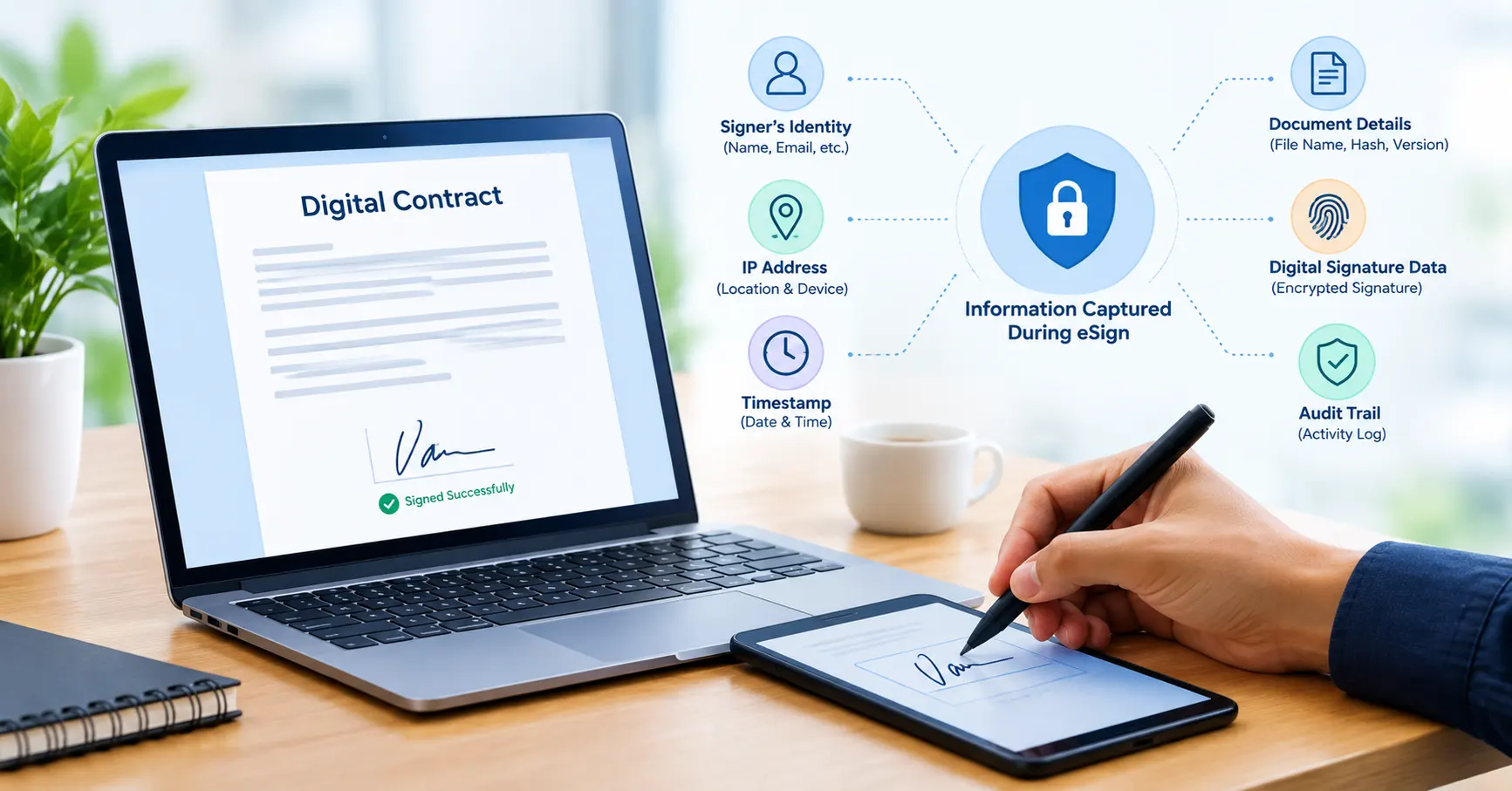
What Information Is Captured When You eSign a Digital Contract?
When you sign an agreement online, you may think the process simply involves clicking a “Sign†button. In reality, esign for digital contracts involves the collection of several pieces of information that help identify the signer, confirm their intent, and establish the integrity of the signed document. From timestamps and IP addresses to authentication records and document history, these details create a reliable record of the signing event.
Understanding what information is captured during an electronic signing process is important for businesses, professionals, and individuals who regularly handle agreements online. It also helps explain why modern electronic signatures can provide strong evidence of who signed a document, when it was signed, and whether the document was changed afterward.
What Is Captured During eSign for Digital Contracts?
An electronic signing platform typically records more than the signature itself. The information collected can vary depending on the provider, authentication method, contract type, and applicable regulations. However, most professional platforms maintain a combination of identity, technical, document, and transaction-related information.
1. Signer Identity Information
The first category involves information used to identify the person signing the agreement. This may include the signer's name, email address, phone number, user account details, or other identification information.
Depending on the level of authentication required, a signing platform may also use one-time passwords (OTPs), identity documents, biometric verification, or digital certificates.
This information supports signature verification data, allowing the parties involved to establish a reasonable connection between the signer and the electronic signature.
2. Date and Time of Signing
A digital contract normally records when important actions take place. This can include when the document was opened, viewed, signed, completed, or rejected.
These timestamps are particularly useful when an agreement involves deadlines, renewal periods, approval stages, or multiple signers. A precise record can help establish the sequence of events if a dispute occurs.
The timestamps become an important part of the esign audit trail, because they show how the signing process progressed from start to completion.
3. IP Address and Device Information
Many electronic signing systems record technical information associated with the signing session. This may include the IP address, browser type, operating system, device type, and sometimes general geographic information derived from the IP address.
This data does not necessarily prove a person's physical location, but it can provide additional context about the signing event. For example, if a contract is signed from a particular account using a specific device and IP address, that information can contribute to the overall evidence surrounding the transaction.
Such records are also relevant to digital contract security, particularly when organizations monitor unusual login activity or unauthorized access attempts.
4. Document and Transaction Details
The signing system can also retain information about the document itself. This may include the document name, version, unique transaction ID, number of pages, signing order, and completion status.
Some systems use cryptographic techniques or document hashes to help detect changes to the file after signing. If the document is modified after completion, the system may be able to identify that the original signed version no longer matches the authenticated version.
This provides an additional layer of protection for agreements exchanged electronically.
5. Authentication and Verification Records
Authentication is one of the most important components of electronic signing. Depending on the platform, a signer may be required to verify their identity through email authentication, SMS OTP, password-based access, digital certificates, or stronger identity verification methods.
The resulting records can form part of the electronic signing information associated with the transaction. They help demonstrate that reasonable steps were taken to connect the signature with the intended signer.
For contracts involving sensitive financial, legal, employment, or business information, stronger authentication can provide greater confidence in the signing process.
How eSign for Digital Contracts Creates an Audit Trail
One of the biggest advantages of electronic contracting is that the signing process can automatically create a chronological record of important activities.
An esign audit trail can document actions such as sending the agreement, opening the document, viewing specific pages, completing authentication, applying a signature, and finalizing the transaction. Depending on the platform, it may also record reminders, signing attempts, delegated actions, and completion events.
This makes the electronic process different from simply inserting an image of a handwritten signature into a PDF. A professional electronic signing workflow creates surrounding evidence that can help establish the authenticity and history of the transaction.
A typical audit record may contain:
- Signer's name and contact details
- Date and time of signing activities
- IP address and device information
- Authentication method
- Document or transaction identifier
- Signature status and completion information
These records should be protected against unauthorized modification. Secure storage, access controls, encryption, and tamper-evident technologies are important components of reliable digital contract security.
For organizations managing large volumes of agreements, platforms that automatically maintain these records can reduce administrative work and make contracts easier to track.
Explore More: Digital Signature Certificate in Udaipur | Best DSC Services in Kota | DSC Service in Ajmer
What Is the Role of Signature Verification Data?
Signature verification data helps establish that an electronic signature is associated with the person who applied it and that the signed document has not been improperly altered.
The exact data depends on the type of electronic signature. Basic electronic signatures may rely on account credentials, email authentication, OTPs, or other evidence. More advanced digital signatures can use cryptographic keys and digital certificates to verify the signer's identity and document integrity.
This distinction is important. Not every electronic signature works in exactly the same way, and the appropriate signing method depends on the legal, regulatory, and business requirements of the agreement.
In certificate-based signing environments, verification can involve information about the certificate issuer, certificate validity, public key, and cryptographic signature. These technical elements provide stronger evidence that the document has remained unchanged since signing.
How Is Electronic Signing Information Protected?
Collecting information is only one part of the process. A reliable platform must also protect the information it captures.
Electronic signing information can include personally identifiable information, authentication records, technical data, contract content, and transaction history. Therefore, businesses should consider how their signing provider stores, processes, and protects this information.
Strong security practices can include encryption during transmission and storage, role-based access controls, secure authentication, monitoring, data retention policies, and tamper-evident records.
Businesses should also review how long signing records are retained and who can access them. Retaining unnecessary information indefinitely can increase privacy and security risks, while deleting important records too quickly may make future verification difficult.
For organizations operating in regulated environments, compliance requirements may also influence how electronic records are stored and managed. Choosing a provider with appropriate security controls and compliance practices can therefore be an important part of contract management.
Solutions offered by providers such as Rajasthan DSC Services may also be relevant for organizations looking for digital signing and certificate-based authentication solutions.
Why Does This Information Matter for Businesses?
The information captured during an electronic signing transaction can provide valuable evidence throughout the lifecycle of a contract.
For example, suppose a company needs to determine whether a supplier actually signed an agreement. The organization may be able to review the signer identity, authentication event, timestamp, IP information, document version, and transaction history.
Similarly, if someone claims that the contract was modified after signing, the document integrity information and transaction records may help determine what happened.
The combination of these records is what makes modern electronic contracting more than a simple digital replacement for a handwritten signature.
From a risk-management perspective, businesses should consider electronic signatures as part of a broader contract security framework. Proper identity verification, access management, encryption, document integrity controls, and record retention all contribute to trustworthy digital transactions.
What Should You Check Before Choosing an eSign Platform?
When selecting a signing platform, businesses should look beyond the appearance of the signature itself. The quality of the supporting records and security controls can be equally important.
Look for features such as:
- Strong signer authentication and identity verification
- Detailed electronic signing information and downloadable audit records
- Document tamper detection and integrity verification
- Secure storage and encryption
- Clear data retention and deletion policies
- Multiple authentication options
- Support for applicable electronic signature regulations
- Easy access to completed documents and transaction histories
The right solution should balance convenience with security. A simple signing experience is valuable, but it should not come at the expense of authentication, privacy, or reliable recordkeeping.
Conclusion
When you use esign for digital contracts, the system can capture considerably more than a visual representation of your signature. Identity details, timestamps, authentication events, device information, IP addresses, document details, and transaction history can collectively create evidence of how an agreement was signed.
This information supports contract integrity, accountability, and security while making electronically executed agreements easier to manage. A well-designed signing process also creates an esign audit trail that can help organizations verify important events if questions arise later.
Ultimately, understanding what is captured allows businesses to make better decisions about electronic signature providers, authentication methods, data protection, and contract management. Whether you are signing a simple business agreement or a highly sensitive legal document, the supporting information around the signature can be just as important as the signature itself.